The One-Page Family Command Center That Actually Gets Used
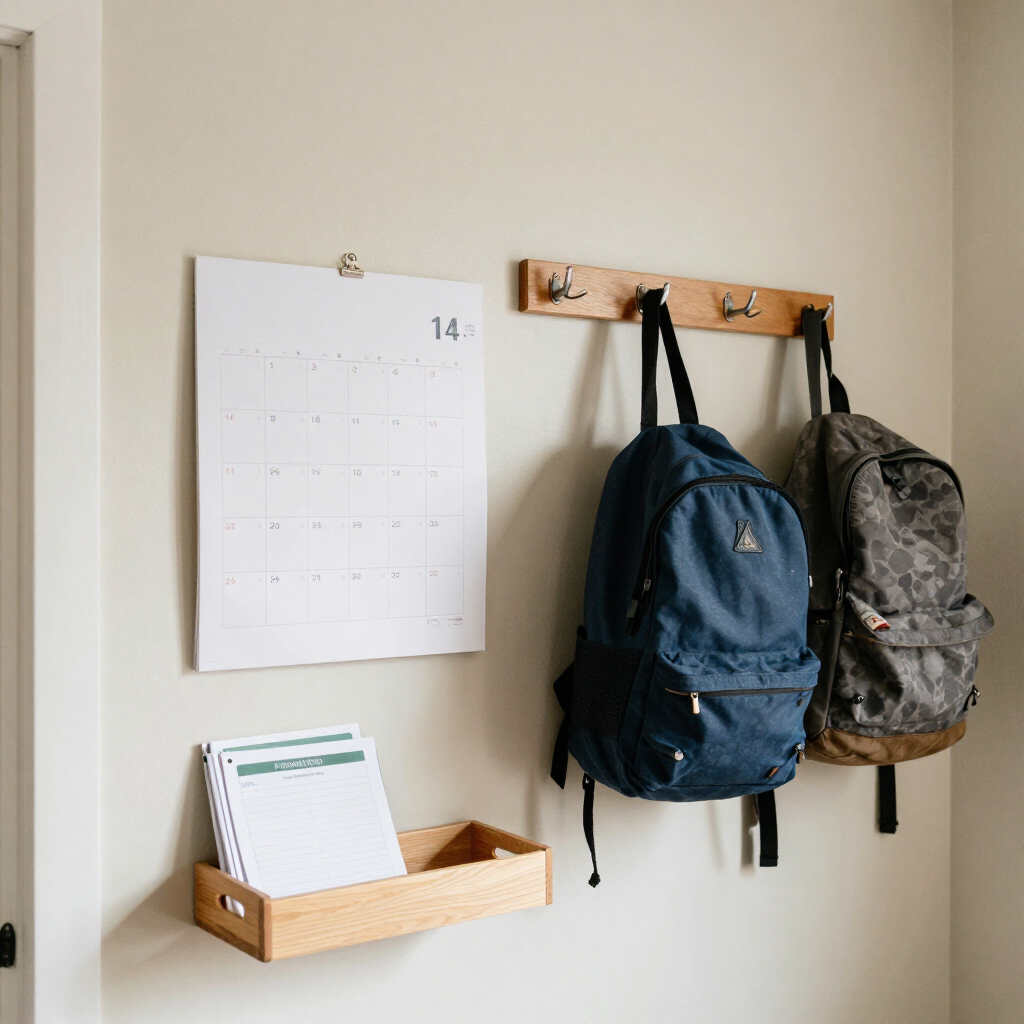
A family command center is not a wall of perfect labels. It is a visible external memory system that answers four questions: What is happening? What needs action? Where does this paper go? What happens next?
The four-zone setup
1. This week
Keep only the current seven days: school events, appointments, practices, and care handoffs. Make the most important commitments easy to see at a glance.
2. Action
Use one tray or folder for forms, permission slips, library books, and items leaving the house. Give it a daily two-minute check so important papers do not disappear into bags or piles.
3. Reference
Store recurring information—emergency contacts, allergy information, bus details, and activity addresses—in a protected folder, not on a public board.
4. Launch pad
Place the items that must leave tomorrow in one designated spot: backpacks, instruments, safely stored medication, and sports gear. Keep the location consistent so everyone knows where to look.
Make it accessible
Use large type, high contrast, uncluttered spacing, and icons for emerging readers. Put the board where caregivers naturally pass it, but avoid displaying private information where visitors can see it.
A shared digital calendar can hold additional details; the physical board should show only the next action. Keep the system simple enough for the whole household to understand without requiring one person to explain it every day.
The weekly reset
On Sunday or another realistic day, remove expired notes, confirm transportation, choose three dinners, and identify one pressure point.
Do not turn the reset into a full household meeting unless your family needs one. A short review is enough to keep the system current. The goal is to reduce mental load, not create another job.
Start with the four zones, use them for one week, and adjust what does not work. A useful family command center should fit real life rather than demand a perfect routine.
A gentle next step
Choose one area that currently creates repeated stress—school papers, tomorrow’s bags, or the week’s appointments. Give it a visible home and agree on one small action everyone can remember.
Build from there. Your family does not need a complicated system; it needs a practical place to see what matters next.
Sources for editorial verification
Harvard Center on the Developing Child, executive-function resources; U.S. Surgeon General, Parents Under Pressure advisory.